

Building a new website is a lot like building a custom home. You wouldn't just start throwing up walls without a solid blueprint, and the same principle applies here. This process is a structured journey that takes an idea from a simple concept to a hard-working digital asset for your business.
Your Blueprint for a High-Performing Website
Getting a new website off the ground can feel overwhelming, but it doesn't have to be. We're going to break down the entire process into six clear phases, giving you a master blueprint for a project that runs smoothly and delivers real results.
Think of it as the project's lifecycle, where each step logically builds on the one before it. We'll explore why jumping straight into design without a solid strategy is a recipe for disaster, and how a focus on conversions from the get-go turns your site from a simple brochure into a lead-generating machine. The end goal is always the same: to build a website that actively helps your business grow.
The Six Phases of Modern Website Development
Creating a powerful online presence isn't just about pretty pictures and clever code; it's a methodical process. Each phase has a distinct purpose, making sure the final website isn't just good-looking but also strategically sound and technically solid. Skipping a step almost always leads to expensive fixes down the line or a site that just doesn't connect with your audience. Having a foundational grasp of web development is key to navigating this journey successfully.
To give you a clearer picture, here’s how a typical project unfolds. This table breaks down each of the six phases, outlining what we’re trying to achieve and what happens at each step.
The Six Phases of Modern Website Development
A summary of each stage in the website creation process, outlining its purpose, key activities, and expected outcomes to guide business owners.
| Phase | Primary Goal | Key Activities |
|---|---|---|
| 1. Discovery & Strategy | To build a rock-solid foundation by defining clear business goals and understanding the user. | Workshops, competitor analysis, audience research, defining KPIs, content strategy. |
| 2. UX/UI Design | To design an intuitive, user-friendly, and visually engaging experience for visitors. | Wireframing, user journey mapping, prototyping, creating visual mockups, branding integration. |
| 3. Development | To transform the approved designs into a live, functional, and fully responsive website. | Front-end coding (HTML, CSS, JS), back-end development (server-side logic), CMS integration. |
| 4. Testing & QA | To ensure the website is bug-free, performs well, and works perfectly on all devices. | Cross-browser testing, device testing, performance checks, link validation, bug fixes. |
| 5. Launch | To deploy the finished website to a live server, making it accessible to the public. | Server configuration, database migration, domain pointing, final pre-launch checks. |
| 6. Maintenance & Growth | To keep the site secure, up-to-date, and continuously improve its performance over time. | Software updates, security scans, performance monitoring, backups, analytics review. |
Each of these phases is essential for a smooth workflow and a predictable, successful outcome. They ensure that nothing gets missed and that the final product is built to last.
A successful website project is 10% design and 90% planning. The initial discovery and strategy phase is the most critical part of the entire process, setting the stage for everything that follows.
From Code to Customers
Once the main build is done, the project enters its final, crucial stages. This is where we polish every detail and get the site ready for its big debut.
The last three stages are all about quality and readiness:
- Testing and Quality Assurance: Before a single customer sees it, the website goes through its paces. We test it on different phones, tablets, and desktop browsers, hunting for any bugs or glitches to ensure everything works exactly as it should.
- Launch: This is the exciting part—showtime! We move the finished site to its permanent home on the web and flip the switch, making it live for the world to see.
- Maintenance and Growth: A great website is never really "finished." It needs ongoing care to stay secure and fast. We also keep an eye on how users are interacting with it, looking for opportunities to make improvements that help it grow with your business.
Getting your head around this lifecycle is a massive advantage for any business owner. For a deeper dive into turning a plan into reality, you might be interested in our guide on building a strategy before launching a website.
Decoding Website Development Costs in Australia
One of the first questions on any business owner’s mind is, "how much is this going to cost?" Getting a handle on the investment for your website design and development is a crucial first step. A realistic budget isn't just about managing expenses; it's about aligning the project with your business goals from day one.
The reality is, there’s no single price for a website in Australia. Costs can swing wildly depending on what you actually need.
Think of it like buying a car. You could get a solid, reliable ute that does the job perfectly well. Or, you could go for a high-performance, custom-built machine with every feature imaginable. Both will get you from A to B, but they’re built for different purposes and come with very different price tags.
It’s the same with websites. A simple site designed to generate leads for a local tradie will have a completely different scope—and cost—compared to a massive e-commerce platform juggling hundreds of products and complex integrations. The trick is to match the investment to the value you expect the website to deliver.
What Influences the Final Price Tag
Several core factors have a direct impact on the final quote. The more customisation and complexity a project involves, the more time and specialist skills are needed, and that’s what you’re paying for. It pays to understand these variables before you start collecting quotes.
Here are the key cost drivers:
- Design Complexity: A completely unique website designed from a blank canvas will always cost more than one built from a pre-made template. Custom graphics, slick animations, and deep branding work all add to the design hours.
- Custom Features and Functionality: Is a simple contact form enough, or do you need a sophisticated booking system that syncs with your calendar? Things like e-commerce functionality, client portals, or interactive quote calculators all require specialist development work.
- Content Management System (CMS): The platform your site is built on matters. While a system like WordPress is incredibly versatile, the level of customisation and the number of plugins needed can influence the cost.
- Agency Expertise: A seasoned agency with a proven portfolio of high-performing websites will likely charge more than a freelancer. What you get for that is strategic insight, dedicated project management, and a whole team of experts in your corner.
This simple breakdown shows the main stages of bringing a website to life, with each step adding to the overall cost.
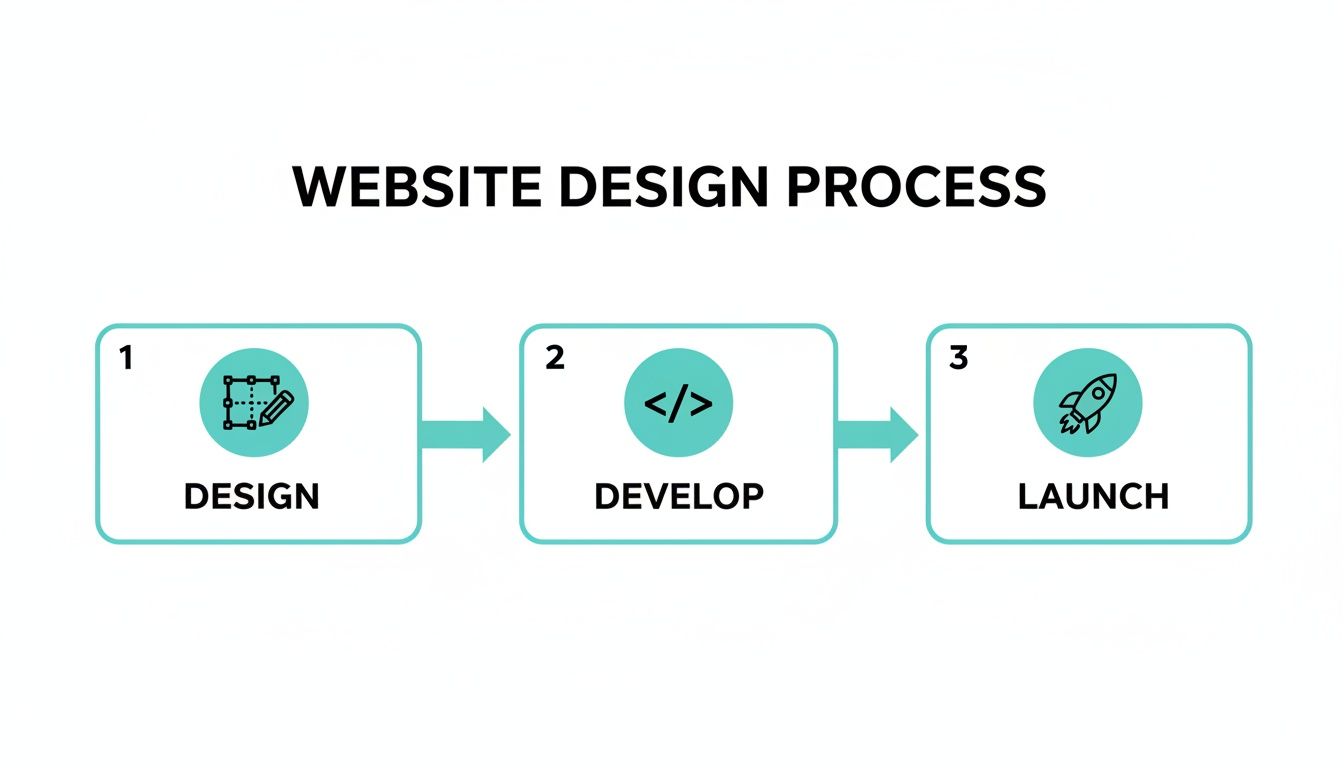
From the initial design mockups to the final technical deployment, each phase requires dedicated time and skill, forming the foundation of your total investment.
Typical Website Cost Ranges in Australia
While every project has its own unique requirements, we can map out some general pricing tiers to give you a ballpark idea. These ranges are a good starting point for benchmarking any quotes you receive and figuring out what’s realistic for your budget.
For many small businesses, a professional, high-performing website is often more affordable than they assume.
A solid, entry-level business website in Australia typically falls in the $4,000 to $6,000 AUD range. This is a common starting point for local trades and professional services businesses looking for a powerful online presence without breaking the bank. An investment like this usually gets you all the essentials for generating leads, including a mobile-friendly design and conversion-focused elements designed to turn visitors into customers.
Key Takeaway: A professional website isn't an expense; it's a core investment in your business's growth engine. A well-built site should pay for itself many times over through new leads, more sales, and stronger brand credibility.
As your business needs become more complex, the investment will naturally grow.
- Mid-Tier Websites ($7,000 – $15,000+): This budget typically covers businesses that need more custom design work, a larger number of pages, or specific features like event calendars or membership portals.
- E-commerce and Complex Websites ($15,000 – $40,000+): This is the territory of online stores with secure payment gateways, inventory management, and custom user accounts. The cost here scales with the number of products and the complexity of the required features.
At the end of the day, the goal is to build a digital asset that delivers a genuine return on your investment. If you want to dig a bit deeper into these figures, you can learn more about our approach to website design costs and value.
Designing for Customers, Not Just Your Brand
What’s the point of a beautiful website if nobody can figure out how to use it? It’s little more than a very expensive piece of digital art. The most successful websites are always built with one person in mind from the very first sketch: the customer. This is where a user-centric design approach isn't just a good idea; it's everything.
A great way to think about this is to imagine your website as a physical shop. The User Experience (UX) is the practical stuff—the logical layout of the aisles, the clear signs pointing to the right sections, and a checkout process that’s quick and painless. User Interface (UI), on the other hand, is the shop's style and atmosphere. It's the lighting, the colour scheme, and the appealing product displays that make you want to be there.
You absolutely need both. A stunning-looking shop that’s impossible to navigate will only lead to frustrated customers walking out. Likewise, a logically laid out shop that feels dated and drab won't inspire the trust needed to make a sale. Truly effective website design strikes that perfect balance, creating a seamless path that guides visitors from the moment they arrive to the moment they convert.

Why Mobile-First Design Is Non-Negotiable
Here in Australia, designing for the small screen first isn’t just some trendy tactic; it’s a core business strategy. The simple truth is that Australians are overwhelmingly using their phones to browse and buy. If you ignore this, you're deliberately turning your back on the majority of your potential customers.
The data tells a clear story. With a massive 67% of search queries now happening on mobile devices, your website's performance on a smartphone is its most critical test. This is particularly true for Adelaide businesses in e-commerce, trades, and professional services, where people are often searching for solutions while they're on the move. The Australian mobile market is immense, with an incredible 34.8 million mobile connections—that's significantly more devices than people. You can find more fascinating stats about Australian digital behaviour on roi.com.au.
A mobile-first approach means we build the experience for a phone from the very beginning, then scale it up for tablets and desktops. This forces a focus on what's most important, ensuring the core functions are clean, fast, and dead simple for every visitor, no matter what device they're using.
A website that isn't optimised for mobile is like a shop that keeps its front door locked during business hours. You might have the best products in town, but most people will simply turn around and go somewhere else.
Using Data to Drive Design Decisions
Guesswork has no place in high-performance web design. Every single decision—from the colour of a "Book Now" button to the placement of a contact form—should be backed by real data. This is how we shift from building a website that merely looks good to one that is methodically engineered to generate leads and sales.
Data-driven design is a continuous loop of analysing, testing, and refining.
- Heatmaps and Click Tracking: These tools are like a window into your user's mind, showing us exactly where they click, tap, and scroll. They highlight the "hot" areas of a page getting all the attention and the "cold" spots being ignored, so we can place your most important content where it can't be missed.
- User Journey Analysis: We use analytics to map out the paths people take through your site. This helps us spot any confusing roadblocks or "friction points" where users get stuck and leave, allowing us to smooth out the journey towards your goals.
- A/B Testing: This is where the magic happens. We can test two versions of a page element—say, a headline or a call-to-action—against each other to see which one performs better with a live audience. It takes the guesswork out of the equation and lets your customers' behaviour guide the design.
By taking this analytical approach, we ensure that every part of your website is focused on one measurable goal: delivering the best possible results for your business. To get a better handle on these core concepts, you might find our guide on fundamental user experience design principles helpful.
Building a Growth-Ready Website the Smart Way
The old way of building a website is officially broken. You know the drill: spend months locked away trying to craft the “perfect” site, only to launch it and find out your customers don't use it the way you thought they would. That’s a huge, expensive gamble.
There’s a much smarter way to play the game. The modern approach is all about getting a strong "version 1.0" out into the world quickly. This lets you start gathering real user data, see what's working, and—most importantly—start getting a return on your investment. It’s a complete mindset shift from building a static online brochure to cultivating a dynamic tool that evolves and grows right alongside your business.
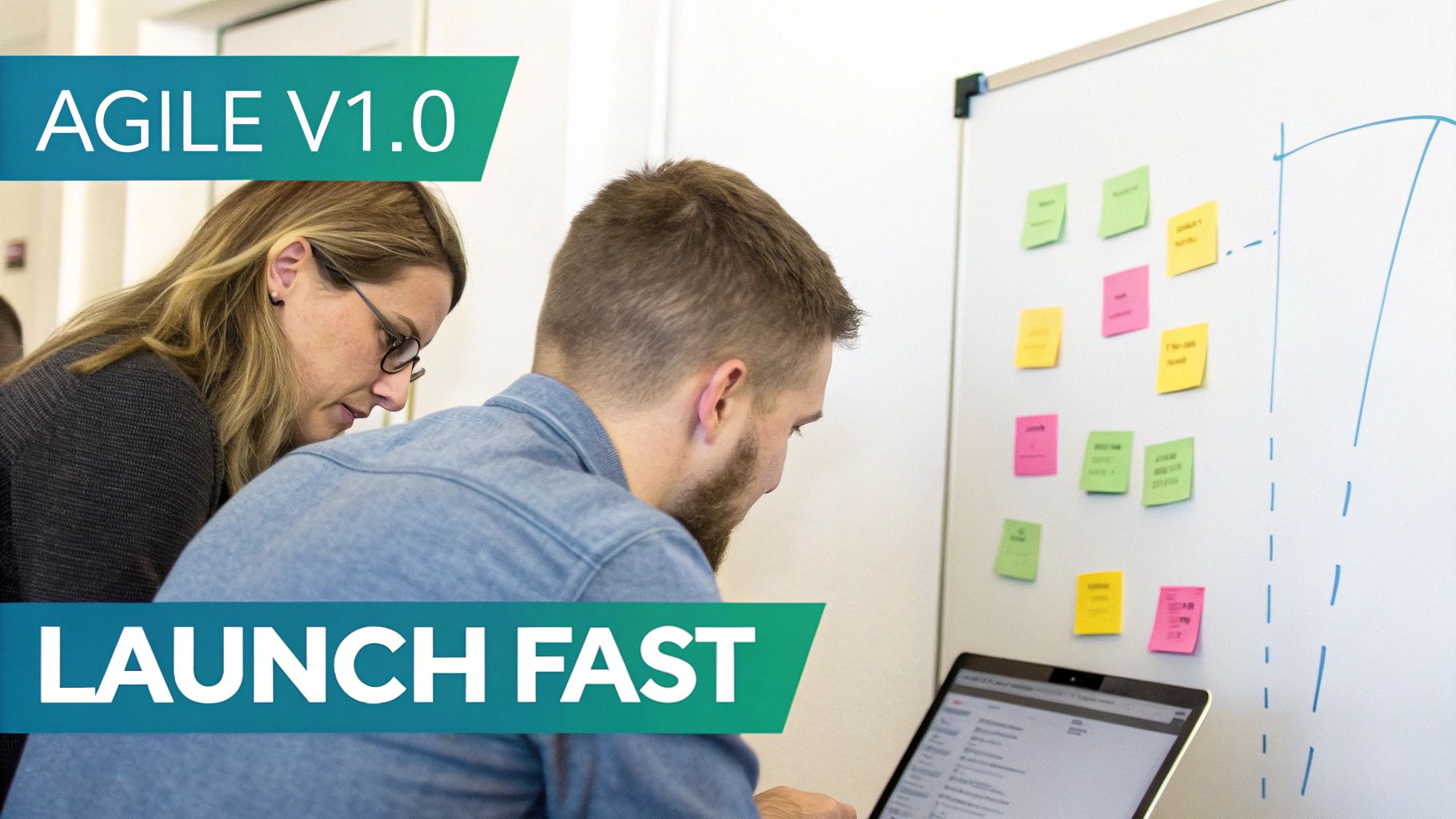
Launch Fast and Iterate with Data
Think of your website launch not as the final destination, but as the starting line. The immediate goal is to get a Minimum Viable Product (MVP) live. Now, this doesn't mean a cheap or half-baked site. It’s a lean, strategic version laser-focused on the core features that solve your customers' biggest problem.
Once your site is live, the real work begins. With analytics hooked up from day one, you can watch how people actually behave—which pages they love, where they get stuck, and what makes them leave. This feedback is gold. It throws guesswork out the window and lets you base every single update on cold, hard facts.
This constant cycle of improvement feeds directly into your marketing efforts, creating a powerful feedback loop for growth.
- Data from your Google Ads campaigns can tell you which headlines and offers get the most clicks, giving you proven copy to use on your site.
- Heatmap tools can literally show you where users are trying to click, telling you exactly where your most important buttons should go.
- Session recordings let you watch a visitor's journey, instantly revealing any confusing or frustrating elements in your design.
By continuously optimising, you put your budget toward changes that are proven to get results, dramatically reducing your upfront risk.
The Rise of the Version 1.0 Launch
This "launch-and-learn" approach is catching on fast right across Australia. Smart business owners are choosing to build a solid foundation first, rather than chasing a "perfect" site that takes forever to launch. They get it: proving an ROI quickly is far more valuable than waiting months for a fancy feature nobody might even use.
For many, this looks like launching a powerful lead-generation site for under $5,000 and then building it out based on performance. It’s a strategy that allows businesses from local tradies to new e-commerce brands to get in the game faster and start winning customers. This momentum is everything; it’s about making smart, data-driven decisions that lead to scalable growth.
A growth-ready website isn't built; it's grown. It starts with a strong seed (your version 1.0) and is nurtured with real user data to flourish into a powerful business asset.
Building a Scalable Foundation
Starting with an MVP doesn't mean you can skimp on quality. That initial build has to be technically sound, secure, and built on a platform that won't hold you back later. Picking the right Content Management System (CMS) and insisting on clean, professional code from the start is non-negotiable. This is what ensures that adding new features down the track is a simple update, not a complicated and expensive rebuild.
As you grow, you can then plan for more advanced features. For instance, you could build an AI chatbot website to handle customer enquiries 24/7. An addition like this becomes part of a later, planned iteration, added only when your core site is already bringing in leads and you have the data to prove it's a worthwhile investment. This phased approach makes powerful tech more accessible and ensures you’re only building what your business truly needs.
Sidestepping the Common Traps in a Website Project
Even the best-laid plans for a new website can go sideways. Knowing where the pitfalls are is the first step to avoiding them, keeping your project on track and on budget. Building a website is a serious investment, and you want to protect it by steering clear of these all-too-common mistakes.
Most projects run into trouble for a handful of the same reasons. By knowing what they are ahead of time, you can turn a potential disaster into a minor bump in the road and launch a site that works without the headaches and cost overruns.
The Problem of Scope Creep
Scope creep is the silent killer of website projects. It’s what happens when the goalposts keep moving, and the project slowly expands beyond what everyone originally agreed to. It usually starts with a few seemingly harmless requests—"Can we just add one more feature?" or "Let's make a quick tweak here"—but those little additions pile up, blowing out your timeline and budget.
Think of it like building a house. You agree on a three-bedroom, two-bathroom plan. But halfway through, you decide you want a balcony. Then a swimming pool. Then a guest cottage out the back. Each change sounds reasonable on its own, but together they completely derail the original plan, schedule, and cost.
The best defence is a rock-solid project scope, hammered out during the discovery phase. This document is your rulebook, detailing every single feature, function, and deliverable.
- Set Clear Boundaries: Be explicit about what’s included in the project. Just as importantly, list what isn’t included.
- Create a Change Process: Have a formal system for requesting changes. This ensures everyone understands how a new request will affect the timeline and final cost before it’s approved.
A well-defined scope is your project’s North Star. It keeps the entire team pointed in the same direction and focused on the end goal.
Communication Breakdowns
When communication between you and your agency gets fuzzy, things grind to a halt. People start making assumptions, feedback gets misinterpreted, and progress stalls because nobody is on the same page. Without a constant, clear flow of information, misunderstandings are inevitable.
Key Insight: Don’t just wait for your agency to reach out. Proactive communication is the engine of a successful web project. Insist on weekly check-in calls and a shared channel (like Slack) for quick questions and updates.
Good communication also means giving feedback that your team can actually use. For instance, when you're reviewing a design, avoid vague comments like, "I don't like it." Instead, explain why it’s not working. Is the tone wrong for your audience? Does the colour scheme clash with your brand identity? Actionable feedback like this lets the design team make smart revisions without guessing.
Forgetting About SEO and Content Until It's Too Late
This is a classic mistake. So many businesses treat Search Engine Optimisation (SEO) and content as an afterthought—something to bolt on once the website is built. That’s like building a beautiful new shop in the middle of a field with no roads leading to it. If people can't find you, it doesn't matter how great your site looks.
SEO isn't just a sprinkle of magic dust you add at the end; it needs to be baked into the design and development of a website from the very beginning.
- Start with Keyword Research: This needs to happen right at the start, in the strategy phase. The results should dictate your site's structure, page names, and overall content plan.
- Build a Strong Technical Foundation: Your website must be built with clean code, be lightning-fast, and work flawlessly on mobile devices. These aren't nice-to-haves; they're table stakes for Google.
- Content Comes First: You need to have high-quality, customer-focused content ready to go before launch. A stunning design filled with "Lorem Ipsum" placeholder text is completely useless for attracting your first visitor.
By thinking about SEO and content from day one, you’ll launch a website that isn’t just a pretty face. It’ll be a hard-working asset, ready to attract organic traffic and generate leads from the moment you flick the switch.
The Ultimate Checklist for Hiring a Web Design Agency
Choosing the right partner is hands down the most critical decision you'll make for your website. A great agency becomes an extension of your team, a strategic ally genuinely invested in your growth. The wrong choice? That often leads to a stalled project, a blown budget, and a lot of frustration.
This checklist is designed to help you look past the slick sales pitch. Use these questions to get to the heart of how an agency really works, what they can do, and whether they're truly focused on getting you a return on your investment.
Vetting Their Process and Expertise
A professional agency runs on a clear, repeatable process. They don’t just "wing it." If a potential partner can’t walk you through their project stages with confidence, that’s a massive red flag. You need a structured journey, not a mystery tour.
Ask them these questions to understand their approach:
- What does your discovery and strategy phase actually involve? A great answer will detail things like stakeholder workshops, deep-dive competitor analysis, and defining your business goals and KPIs before a single pixel is designed.
- How will we communicate and how will the project be managed? Look for specifics. Do they promise weekly check-ins? Will you have a dedicated point of contact? What tools like Asana or Trello do they use to keep you in the loop?
- Can you show us examples of websites you’ve built for businesses similar to ours? They should be proud to share their portfolio. Even better, ask for case studies that show the actual results they delivered for those clients.
Assessing Technical and Strategic Acumen
Today, a website has to be more than just a pretty face. It’s a hard-working marketing engine. That means you need an agency with serious skills in both the technical nuts and bolts of development and the strategic side of digital marketing.
A great web agency doesn’t just build what you ask for. They challenge your assumptions and bring new ideas to the table, focusing on the business outcomes a new website should deliver.
Dig a little deeper into their capabilities by asking:
- How do you approach mobile-first design and performance optimisation? Their answer should immediately focus on building for mobile from the very start. They should also bring up critical concepts like page speed and Google's Core Web Vitals.
- What’s your process for making sure the site is SEO-ready from day one? A good agency will talk about integrating keyword research, on-page SEO, and technical best practices from the beginning—not as an afterthought.
- How will we measure success once the site goes live? The best agencies will jump straight to talking about analytics, setting up conversion tracking, and building dashboards to monitor the metrics that actually matter to your business.
To make this even easier, we've put together a quick-reference table. Think of it as your cheat sheet for those initial agency calls. It will help you compare their answers and spot the difference between a true partner and a simple vendor.
Agency Vetting Checklist Key Questions to Ask
| Category | Question to Ask | What a Good Answer Looks Like |
|---|---|---|
| Process & Communication | What does your end-to-end process look like, from discovery to launch and beyond? | A clear, multi-stage process (e.g., Discovery, UX/UI, Development, Testing, Launch, Support) with defined deliverables for each stage. |
| Portfolio & Experience | Can you show me 3 projects in a similar industry or with similar challenges to ours? What were the results? | They provide relevant case studies with measurable outcomes (e.g., "we increased their leads by 40%") and can explain why those projects were successful. |
| Strategy & ROI | How will this new website help us achieve our specific business goals (e.g., more leads, higher sales)? | They ask clarifying questions about your goals and then connect specific website features or design choices directly to achieving those outcomes. |
| Technical Expertise | What technology stack do you recommend and why is it the right fit for us? | A clear justification based on your needs for scalability, ease of use, and security—not just what they're comfortable with. They explain the pros and cons. |
| SEO & Marketing | How do you ensure our new site is optimised for search engines right from the start? | They talk about integrating SEO from the discovery phase, including technical SEO audits, keyword strategy, and content planning, not just adding it on at the end. |
| Post-Launch Support | What happens after the website goes live? What do your maintenance and support plans include? | Clear, tiered options for ongoing support, including security updates, backups, performance monitoring, and options for future development or CRO work. |
Using these questions as a guide will empower you to have much more meaningful conversations. It shifts the focus from just "how much will it cost?" to "what value will you deliver?"—which is exactly where it should be. The goal is to find a partner who understands your business and has the proven ability to build a website that drives it forward.
Your Website Development Questions, Answered
Thinking about a new website often sparks a lot of questions. We get it. To help clear things up, here are some straight answers to the queries we hear most often from business owners just like you.
How Long Does It Take to Build a Website?
This is the big one, and the honest answer is: it depends. For a straightforward website designed to generate leads for a local business, you're typically looking at a 4 to 6 week journey from our first chat to launch day. This gives us enough time to properly plan, design, build, and test everything.
On the other hand, if you're dreaming bigger—say, an e-commerce shop with hundreds of products or a site with custom features like a client portal or booking system—the timeline will naturally stretch. These more involved projects can easily take 12 weeks or more. The main things that shape the schedule are the sheer scope of the work, the design's complexity, and how quickly you can give us feedback at each stage.
Will I Be Able to Update the Website Myself?
Absolutely. The last thing you want is a website you can't touch. We build our sites on user-friendly platforms called Content Management Systems (CMS), like WordPress, so you're always in control.
After a bit of training from us, you'll be able to log into a secure dashboard and handle everyday tasks with confidence, such as:
- Publishing new blog posts or company news.
- Updating text and swapping out images.
- Adding new team members or project case studies.
Of course, for any major changes to the site's layout or core functions, it’s always best to loop us in. That way, we can make sure nothing accidentally breaks.
A great website is a living asset, not a static brochure. Being able to make quick content updates is essential for keeping your site fresh for both your customers and the search engines.
What Is a Content Management System (CMS)?
Think of a CMS as the control panel for your website. It’s the software working behind the scenes that lets you add, edit, and manage all your content without having to write a single line of code. Instead of wrestling with complex files, you get a simple, visual interface that feels a lot like using a word processor.
The most popular CMS on the planet is WordPress, which runs a staggering 43% of all websites. Its success comes down to being incredibly flexible, relatively easy to use, and supported by a huge global community. It provides a rock-solid foundation that can grow with your business, from a simple online brochure to a powerful e-commerce machine.
Ready to build a website that does more than just look good? The team at Frank Digital Agency blends sharp, conversion-focused design with smart, data-driven marketing to get real results for Adelaide businesses. Let's create a website that works tirelessly to bring you leads and grow your revenue. Start your project with us today.